

After not being able to return to Grounds in the fall, Giovanna Veiga de Almeida (Belo Horizonte, Brazil) gained new appreciation and insight as she made her way back to UVA in January for her final semester. She recounts her experience at home in Brazil as a newfound ambassador for the sport and shares her experience navigating the difficulties of traveling internationally during a global pandemic.
Q: You were the first international recruit and scholarship recipient for the squash program. What made you decide to come to the University of Virginia?
Almeida: I really wanted to, first of all, study in the U.S., because in Brazil there’s really not a follow up to college squash or anything like that. So, I knew I wanted squash to be a part of my life. When I came to visit UVA, I had an amazing visit. All the girls were so involved and took me to the Downtown Mall, Bodo’s, all those places. I saw the courts, we had just become varsity (status), so everything was really phenomenal. I also had a really good relationship with Mark (Allen). Me and my parents would talk to him over Zoom and everything, and I just really liked the environment, coaches and staff.
Q: Because you wanted to play squash in college, did you know at an early age that you would want to compete in the United States?
Almeida: I think so. It’s also because I have an older brother in the U.S., not at UVA (at Franklin & Marshall), but seeing from his experience, all the fun things he got to do like compete, meet a lot of people – from kind of a young age I was always aware that I wanted that for me as well.
Q: Did having your brother compete collegiately in the U.S. help, especially since you are so far away from home?
Almeida: Yeah, it’s really hard. Especially in Brazil, I don’t think there’s this huge link with college squash and the U.S. My brother, there were a couple of guys before him, but he was kind of one of the first people to actually try and do it. So definitely having him helped me through the process of applications and emailing coaches. All of that was a huge help.
Q: Squash is a very popular sport back home for a lot of your international teammates. Is it a big sport in Brazil?
Almeida: Not really. We (Almeida and her brother) just got into it because we used to play tennis and there was a squash court on the same facility, but it’s not really well known. We definitely do not have a lot of women playing. So, I’d say that it’s not very well known at all.
Q: Does that create the opportunity for you to be an ambassador for the sport, due to the success you’ve had at the collegiate level, and educate those around you about squash?
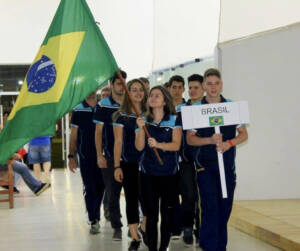
Almeida: Yeah, I felt a lot of that during this past year. During quarantine, different state federations in Brazil for squash invited me to speak live on Instagram or give interviews to try and help other junior players that are looking to do something similar. I think it’s just been really cool being able to first of all have this amazing experience, but then help others by telling them what to do or where I lived and how fun it is and how they should really try to do that.
I was live on Instagram with the federation from my state in Brazil, we have 13 states, so it was more local for that one. Then I also did another live one. It’s actually a really cool initiative. It was a bunch of girls and junior players, and it was one girl from U11, U13, U15-17-19, and they called me too because it would be good to talk to all those juniors about going to college in the U.S. So that was more of a national initiative. It was with the junior squash federation in Brazil.
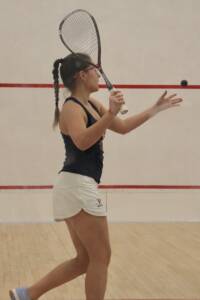 Almeida: I think it’s been an amazing journey. When I got here, I was already amazed. Like I said, squash wasn’t a big thing in Brazil, so coming here and having all those courts and all these people to play, I was already like, ‘Oh my god, this is amazing.’ But seeing where we are now. Obviously, this year is a little hard with COVID, but it’s just been an amazing improvement. I would definitely say the team culture has grown and I feel everyone’s a lot more together now because we practice for more hours and we take this more seriously as a varsity sport. Not just that, the recruiting (has also) changed a lot. I was the first international person to be recruited officially under scholarship and now our teams like 50-50, essentially, internationals and Americans. So that’s really cool, just the increased diversity. But I think we’ve grown so much as a team, as a culture. Going from number 13 in the country in my first year to number nine last year, that’s been really amazing too and I am sure that for the years to come, we’ll just keep on doing better and better.